Florence Epoxy Pros
Industrial Floor Coatings in Florence, AZ
Industrial floor coatings in Florence, AZ for chemical exposure, heat, and heavy equipment areas. Multi-layer systems and free estimates.
- 15+ Years local experience
- 500+ Projects completed
- Licensed & Insured
Serving Florence and nearby communities.
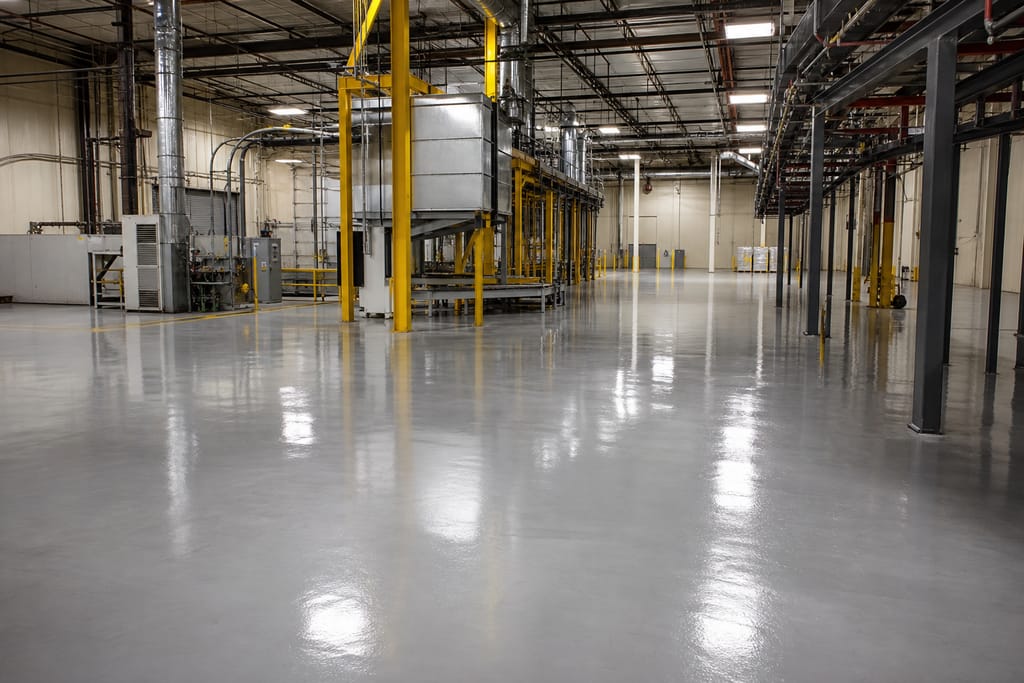
Industrial floors take a beating that garage and retail coatings never see: chemical spills, machinery heat, constant equipment traffic, and in Florence's case, summer slab temperatures that push past what a standard epoxy was built to handle. Florence Epoxy Pros installs multi-layer industrial coating systems rated for process areas, not a single-coat solution borrowed from a residential job.
A lot of Florence's industrial and ag-adjacent buildings sit on older slabs that have absorbed years of oil, fuel, or chemical exposure before anyone calls for a coating. That history changes the prep plan, which is why every industrial job starts with a real evaluation of what the floor has been exposed to before any primer goes down.
What's included
What's Included with Industrial Floor Coatings
Typically included: Aggressive surface prep, chemical-resistant primer, multi-layer coating build-up, and coved containment detailing where needed. Optional: Heat-resistant topcoat for equipment zones, secondary containment liner for spill-prone areas, static-dissipative coating for sensitive processes. Customer prep: Clear or relocate equipment from the work zone and schedule around any required shutdown window.
Want a clearer scope?
Get a Free EstimateHow it works
How Our Industrial Floor Coatings Process Works
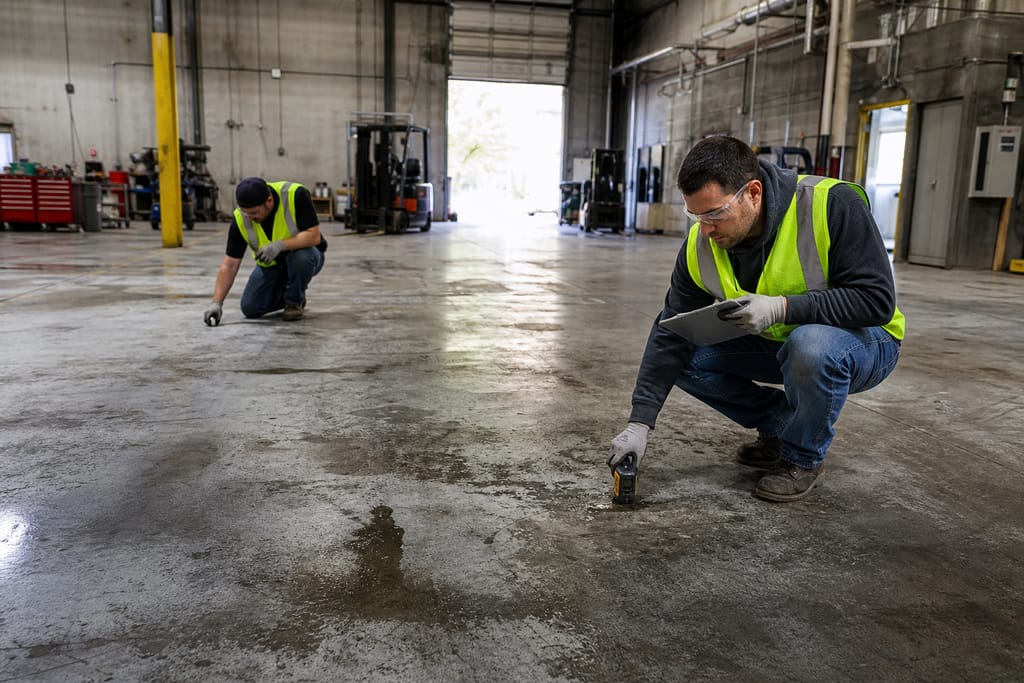 Step 1
Process Area Evaluation
Each zone is assessed for chemical exposure, heat, and heavy equipment use.
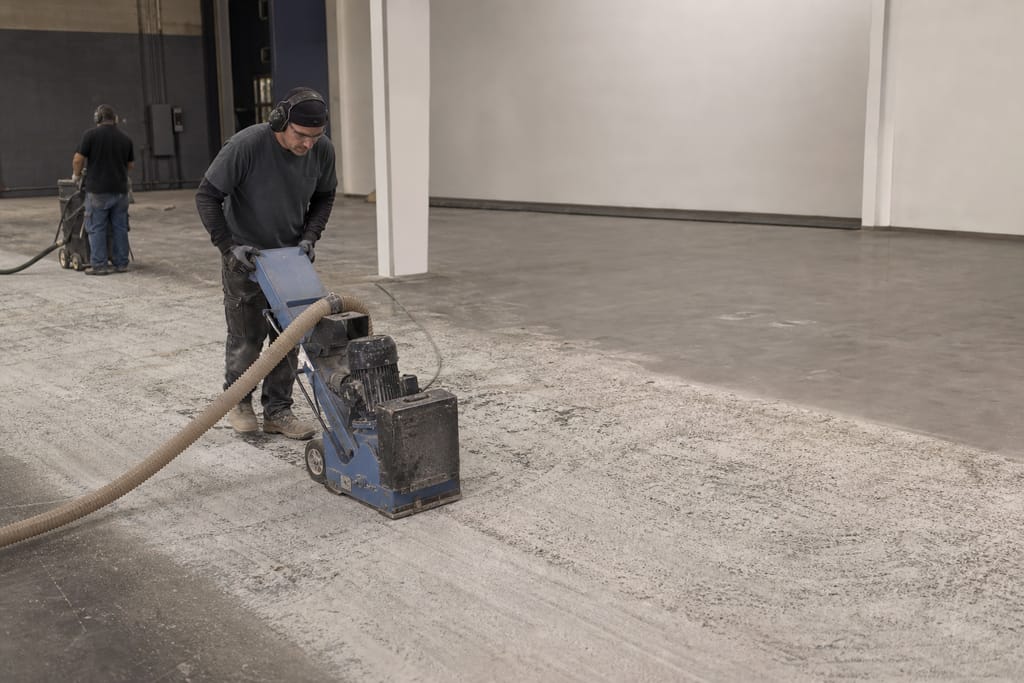 Step 2
Aggressive Surface Prep
Shot blasting or grinding removes contamination and old coatings thoroughly.
 Step 3
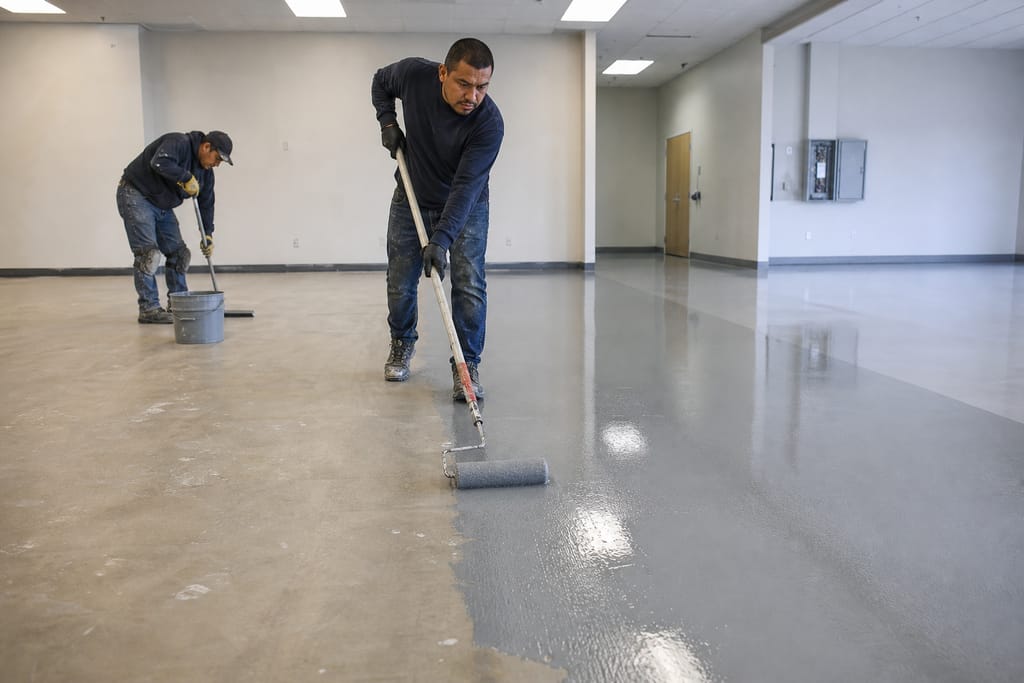
Chemical-Resistant Primer
A specialized primer is applied to resist harsh industrial substances.
 Step 4
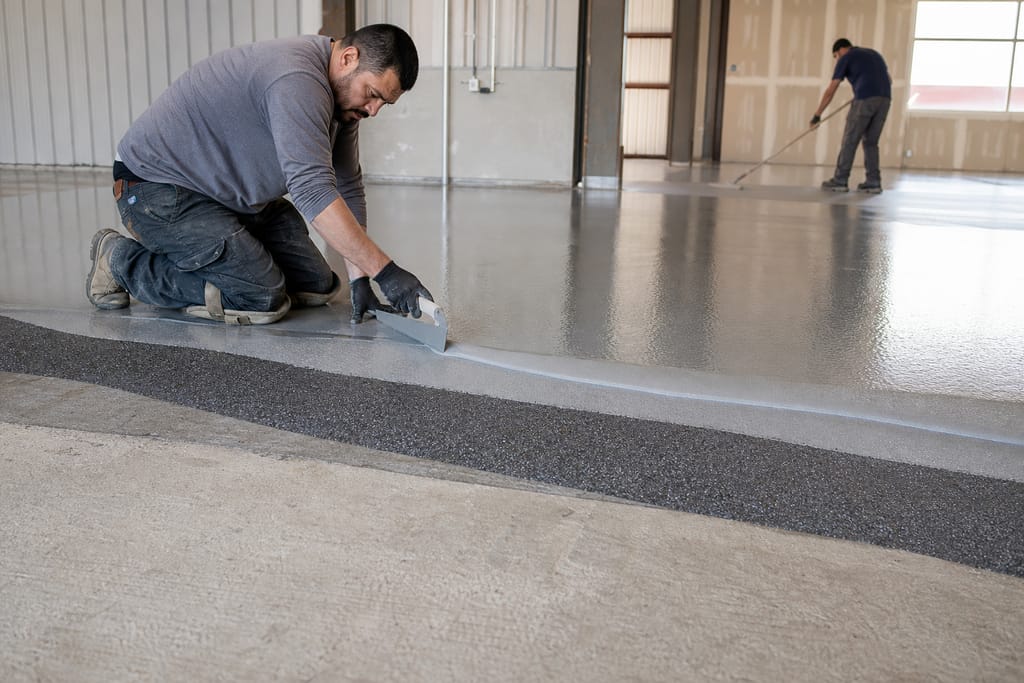
Multi-Layer Build-Up
Several coating layers are applied to achieve required thickness and strength.
 Step 5
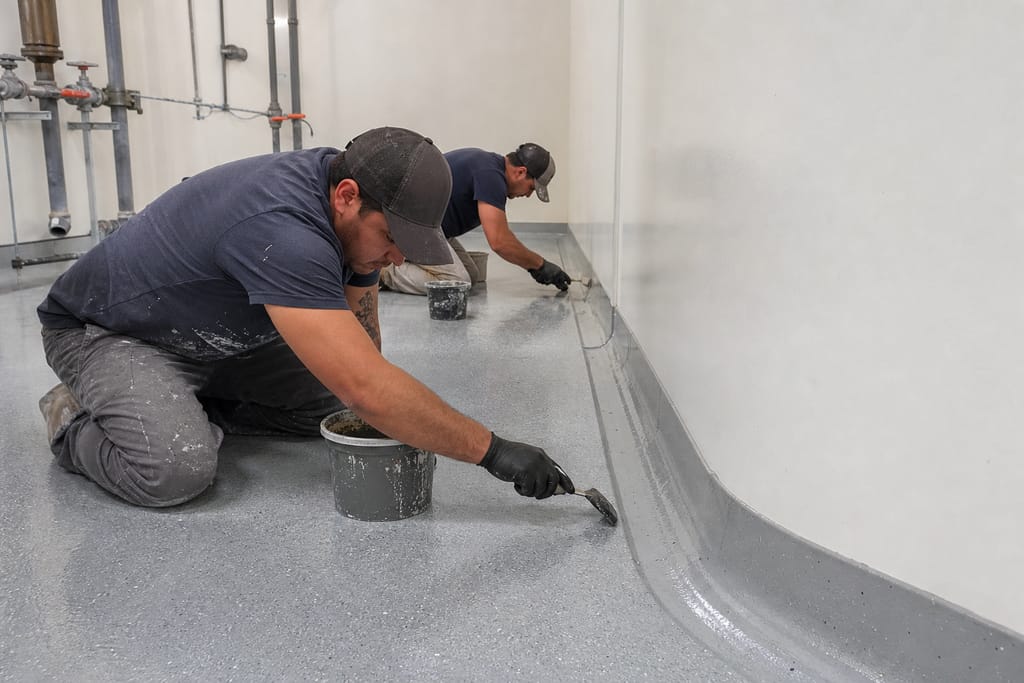
Containment Area Detailing
Coved bases and containment zones are detailed for spill control.
 Step 6
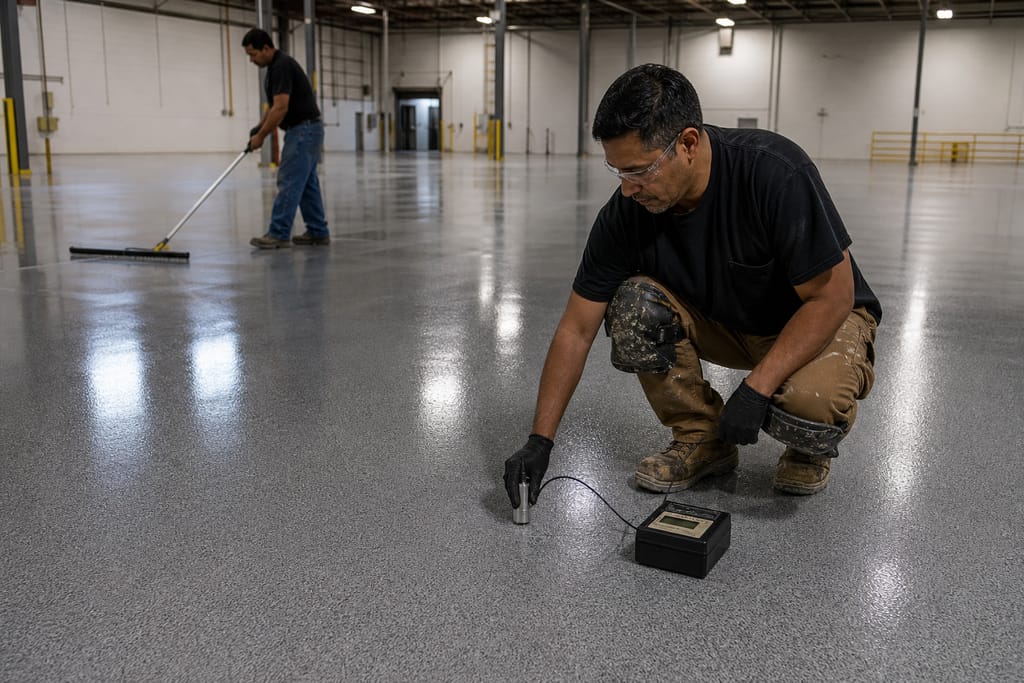
Extended Cure & Testing
The system is cured fully and tested before resuming operations.
Materials
Materials and Methods for Industrial Floor Coatings
Industrial coatings get specified by what the floor is exposed to, not just foot traffic. Each system below targets a different failure point common in process and equipment areas.
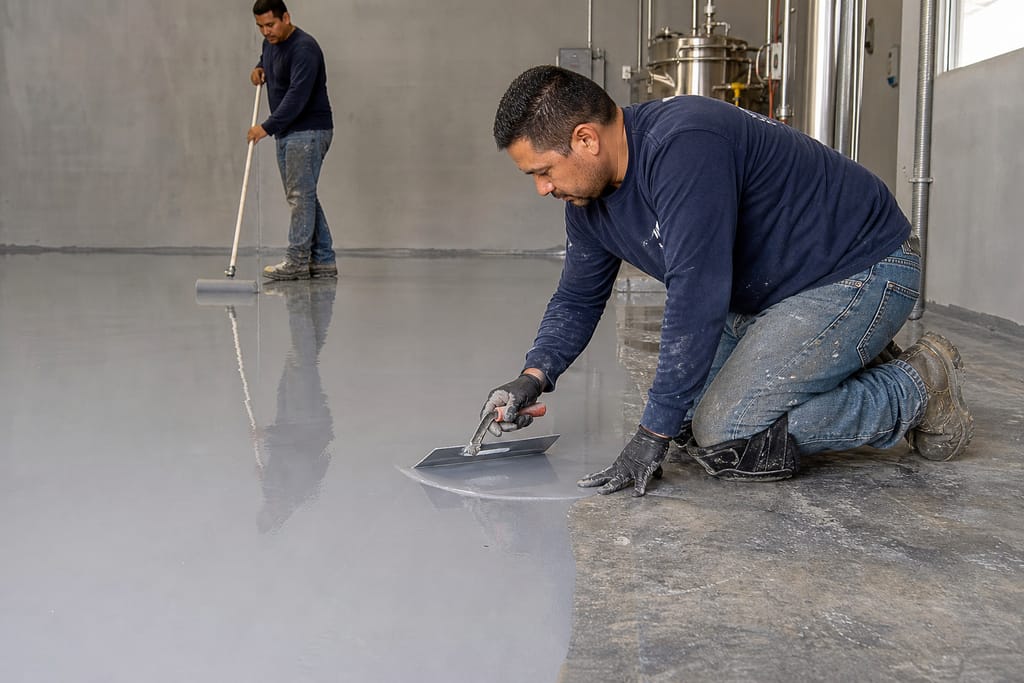
Chemical-Resistant Epoxy
A formula engineered to withstand acids, solvents, and industrial chemicals, suited to any Florence facility handling fuel, oil, or ag chemicals.
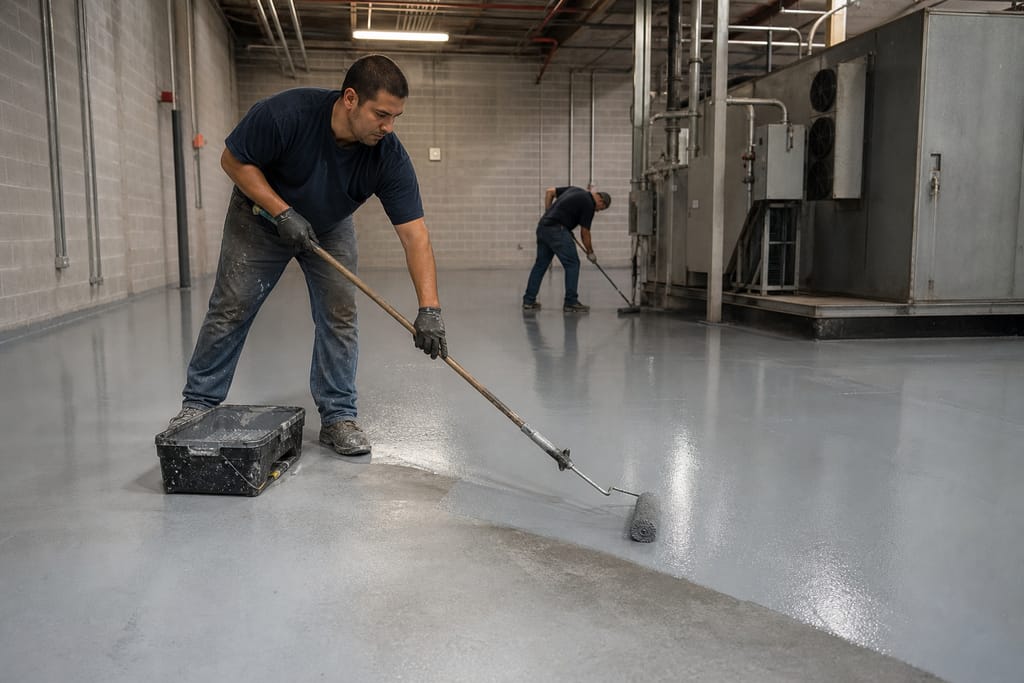
Heat-Resistant Coating
A coating designed to handle elevated temperatures near equipment or processes, important given how hot an unshaded industrial building gets through the summer.
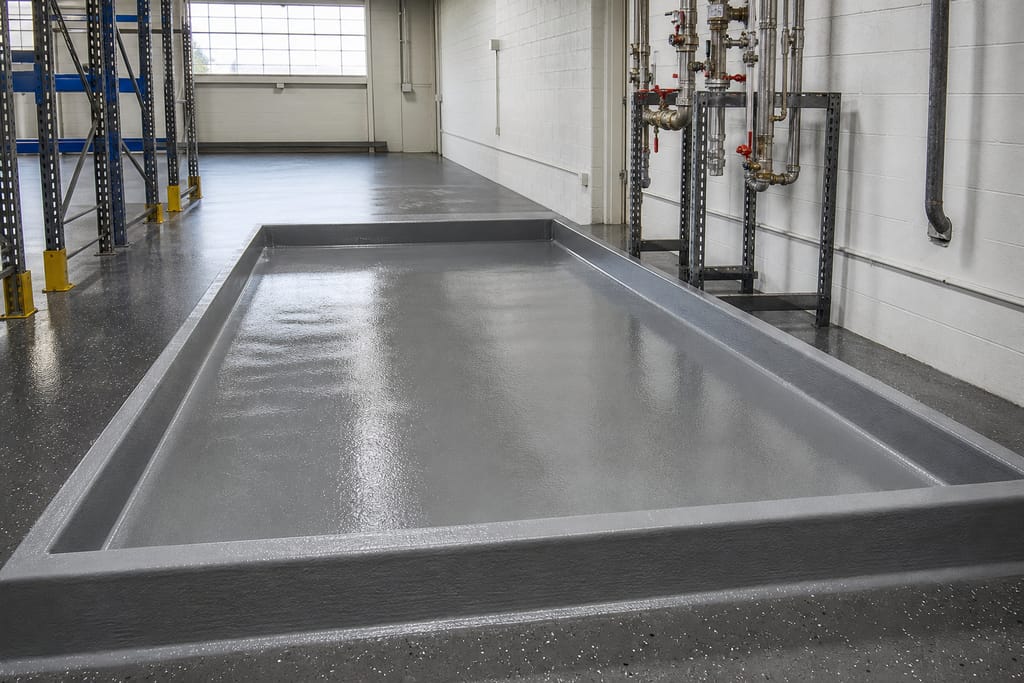
Secondary Containment Liner
A liner system helps contain spills within designated process areas, reducing cleanup and compliance risk.
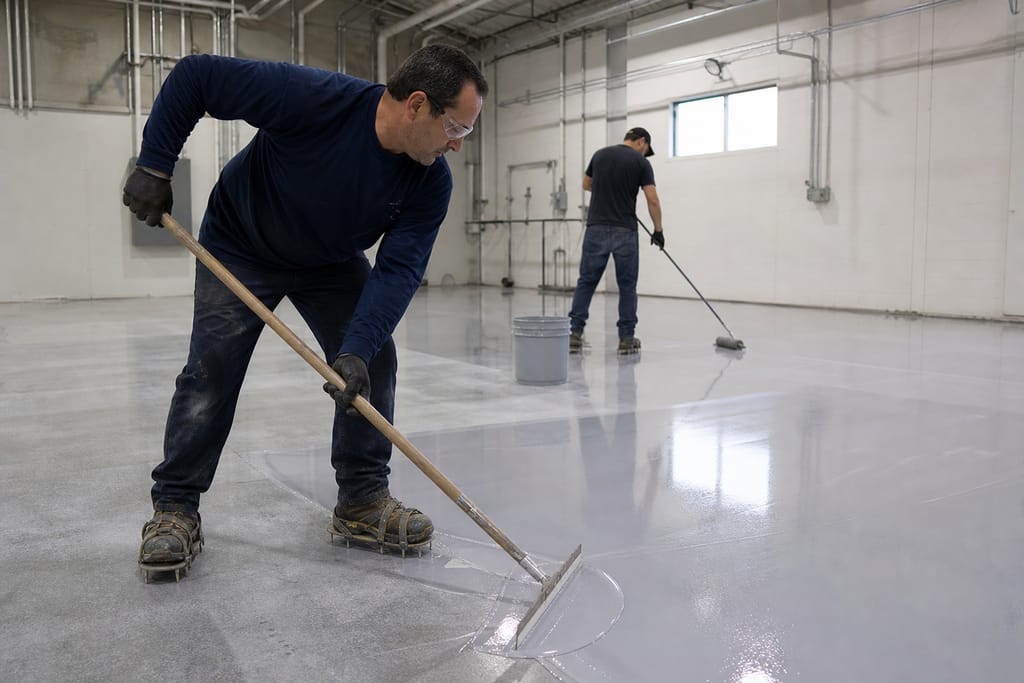
Novolac Epoxy Blend
A high-performance resin blend offers superior chemical resistance for the harshest exposure zones on the floor plan.
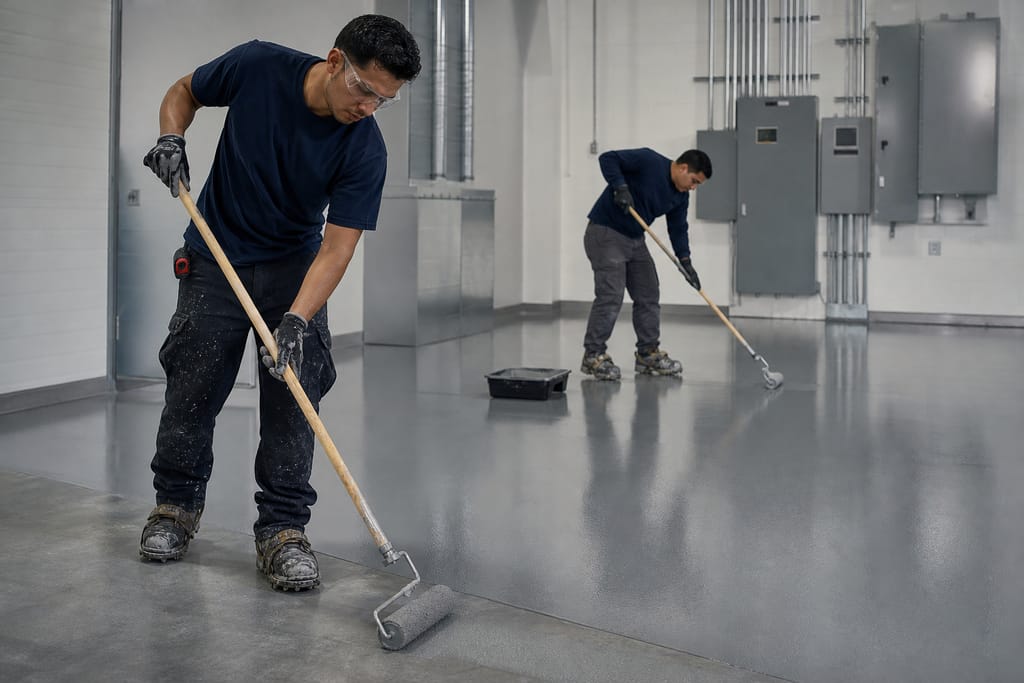
Static-Dissipative Coating
A coating designed to safely dissipate static electricity in sensitive areas, often specified near electronics or fine particulate handling.
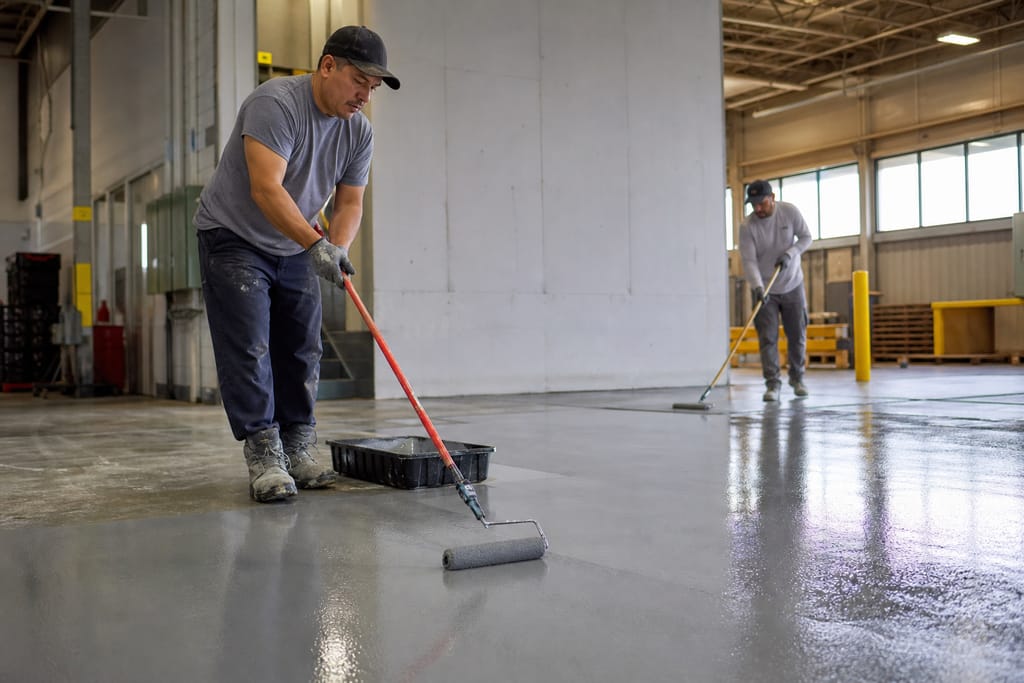
Heavy Traffic Topcoat
A topcoat formulated for constant exposure to heavy machinery and loads, holding up where forklifts and carts run all day.
Questions on materials?
Get a Free EstimateTimeline
How Long Does a Industrial Floor Coatings Take?
Industrial jobs take longer than a garage or retail coating because of the prep intensity and the multi-layer build-up required for chemical and heat resistance.
- 01
Facility evaluation
same day - 02
Surface prep and shot blasting
2 days1 to
- 03
Primer and multi-layer coating application
3 days2 to
- 04
Extended cure before full operations resume
5 days3 to
Need a schedule that fits?
Get a Free EstimateCodes & permits
Permits and Codes for Industrial Floor Coatings
Confirm specific requirements with Pinal County or the Town of Florence, since industrial facilities sometimes carry additional compliance rules beyond standard building permits.
| Typically needs a permit | Often no permit |
|---|---|
| Floor work tied to chemical storage or secondary containment compliance | Recoating an existing sound slab with no structural changes |
| Structural slab repair or replacement in an industrial building | Topcoat upgrades for heat or chemical resistance on an unchanged floor plan |
Need help with permits?
Get a Free EstimateDIY vs pro
DIY vs Hiring a Pro for Industrial Floor Coatings
| DIY | Hire a pro |
|---|---|
| Minor touch-up patching on small, low-exposure areas might be manageable in-house. | Shot blasting and proper primer selection for the specific chemicals or heat the floor will face. |
| Multi-layer chemical-resistant systems require precise mixing ratios and application timing that's nearly impossible to get right without professional equipment and experience. | Coved containment detailing and compliance-grade liner installation aren't something a maintenance crew can install correctly without training. |
Not sure DIY vs pro?
Get a Free EstimateWhen to call
When to Call for Industrial Floor Coatings
Call Florence Epoxy Pros for a free estimate before scheduling your next facility shutdown window.
- Your current floor shows pitting, staining, or breakdown from chemical or oil exposure.
- Equipment heat is degrading a standard epoxy coating faster than expected.
- You need secondary containment or spill control detailing for a new process area.
Seeing warning signs?
Get a Free EstimateFAQs
Industrial Floor Coatings FAQs
How much does an industrial floor coating cost in Florence?
Industrial coatings cost more than garage or retail systems because of the multi-layer build and specialized primers. Pricing depends on square footage, chemical exposure level, and whether containment detailing is needed, a free estimate gives you a real number.
How long does the floor need to cure before full operations resume?
Most industrial systems need 3 to 5 days of extended cure time before heavy equipment traffic resumes, longer than a standard epoxy job because of the thicker, multi-layer build.
Do I need a permit for industrial floor coatings?
Work tied to chemical storage compliance or structural repair usually needs a permit; straightforward recoating on an existing sound slab typically doesn't. Check with the Town of Florence to confirm your specific project.
Is DIY a good option for an industrial floor?
Not for chemical-resistant or multi-layer systems. Getting the primer and resin ratios wrong leads to premature coating failure under heat or chemical exposure, which costs more to fix than hiring it out correctly the first time.
What's the difference between a standard epoxy and a novolac epoxy blend?
Novolac resin offers significantly higher chemical resistance than standard epoxy, making it the better choice for areas exposed to acids, solvents, or aggressive industrial chemicals.
Can you coat around equipment that can't be moved?
Crews can work around fixed equipment, though exposed areas near immovable machinery may need extra detailing or a phased schedule to fully coat the floor.
More services
Other Epoxy Flooring services
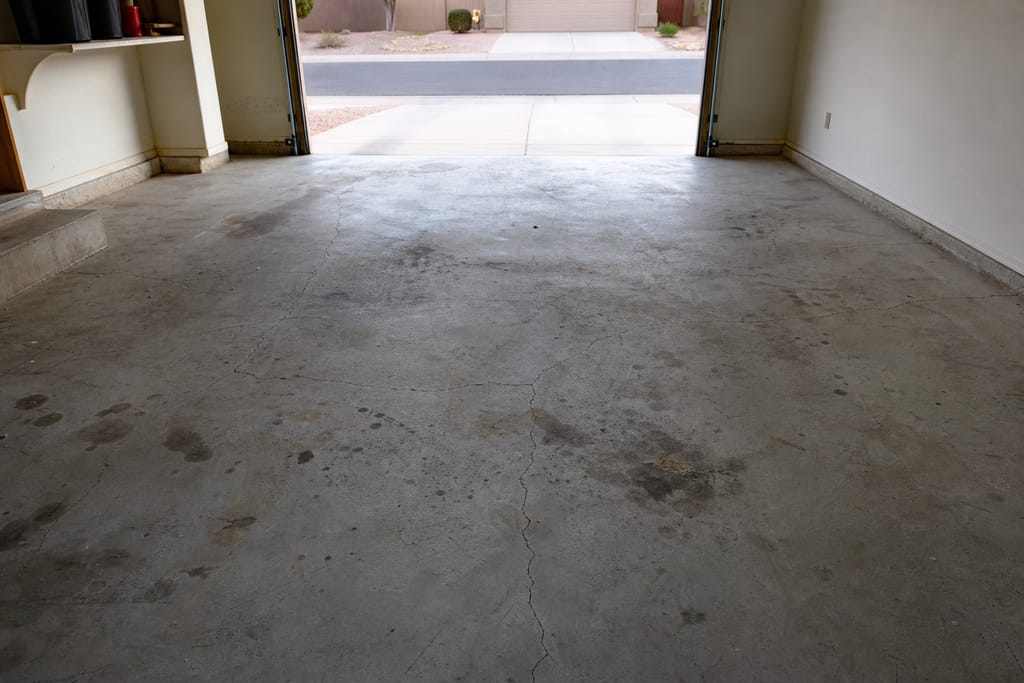
Garage Floor Epoxy Coatings
Garage floor epoxy coatings built for hot Florence slabs and daily vehicle traffic. Free estimates.
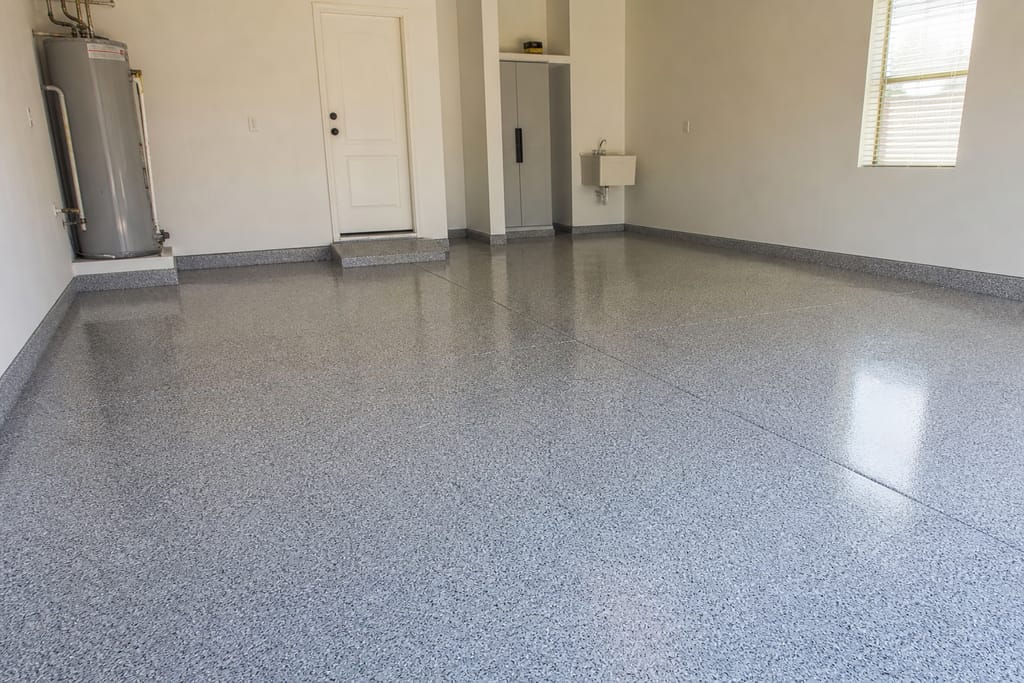
Epoxy Floor Coatings
Epoxy floor coatings for Florence, AZ homes and shops. Durable, heat-rated systems installed on properly prepped concrete. Free estimates.
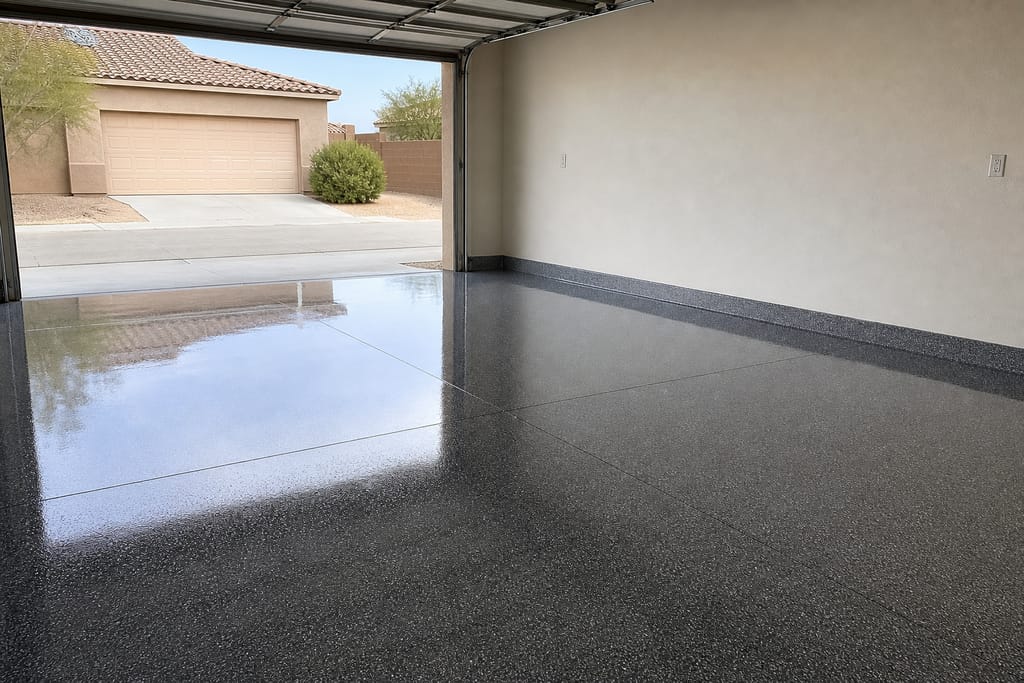
Polyaspartic Floor Coatings
Polyaspartic garage and shop floor coatings built for hot Arizona slabs. Fast cure, UV-stable finish. Free estimates available.
Ask about Industrial Floor Coatings
Tell us about the project and how to reach you.